
Minnesota Septic Tank Regulations — MR 7080 SSTS
Minnesota Septic Tank Regulations
Minnesota's Subsurface Sewage Treatment System (SSTS) rules are under MN Rule 7080, overseen by the MPCA. They include Table V capacity tiers, a formula for systems with 10 or more bedrooms, and a rule for garbage-disposal multi-compartment tanks, applicable from the Twin Cities to the 10,000 Lakes region.
The Governing Framework
Minnesota regulates onsite wastewater under a unified MPCA framework:
- MN Rule 7080 — Individual Subsurface Sewage Treatment Systems (ISTS). Covers systems with design flows up to 5,000 gallons per day — nearly all residential and small-commercial installations.
- MN Rule 7081 — Midsized SSTS. Covers flows from 5,001 to 10,000 gpd.
- MN Rule 7082 — Administrative Requirements of Local SSTS Programs. Governs county-level implementation.
- Minnesota Pollution Control Agency (MPCA) — statewide rule author and licenses onsite professionals.
- Local units of government (LGUs) — Minnesota counties and cities implement SSTS permits under 7082 delegation.
Septic Tank Capacity — 7080.1930 and Table V
Minnesota's capacity framework uses a residence-size-based Table V (specified in 7080.1930) with an explicit formula for larger residences:
| Residence Size | Minimum Capacity |
|---|---|
| Up to 9 bedrooms | Per Table V (graduated tiers) |
| 10+ bedrooms | Capacity = 2,500 + (bedrooms − 9) × 250 |
| With garbage disposal | Capacity ≥ 1.5 × Table V requirement — AND multiple compartments OR multiple tanks required |
The "Setback" Definition — Horizontal Separation Distance
MN 7080 defines "setback" as a separation distance measured horizontally. This matters in Minnesota because:
- Steep lakefront lots in the 10,000 Lakes region have vertical drop that does not count toward setback distance.
- The rule requires clear horizontal measurement between the SSTS and the protected feature (well, water line, lake, etc.).
- Enforcement relies on surveyor-precision horizontal measurement, not eye-level estimation.
Setback tables in 7080 list the required distances between SSTS components and water wells, surface water (like lakes and streams), bluffs, property lines, buildings, and water supply lines. Many local governments in Minnesota have stricter rules than the state minimums, so always check with your county or city.
Permit Process
- Contact your LGU (county or city) planning/environmental office. Minnesota permits are LGU-issued under MPCA delegation.
- Licensed designer prepares design. MN licenses designers, installers, inspectors, and service providers separately under MPCA.
- Soil investigation. Licensed MPCA SSTS Designer or Soil Evaluator conducts the investigation per 7080 soil-analysis protocols.
- Permit application. Design submitted to LGU. Fees vary; typical range $400–$900. Timeline 2–8 weeks.
- Licensed installer constructs. Separate license class from designer.
- Inspection before cover. LGU-designated inspector or licensed inspector verifies installation matches approved design.
- Compliance inspection at property transfer. Many Minnesota LGUs require a compliance inspection at real-estate sale (confirming the system meets current code or is scheduled for upgrade).
Regional Considerations
- Twin Cities Metro (Hennepin, Ramsey, Dakota): Largely on municipal sewer. Remaining SSTS parcels are rural-fringe or lake-country destinations.
- North Country (Cass, Itasca, Crow Wing): Lake country with seasonal cabins. Holding-tank systems common where perc fails. Winter pumping access is an operational reality — tanks must have accessible risers for sub-zero service.
- Iron Range (St. Louis, Lake, Cook): Shallow soil over taconite bedrock. Alternative systems (mounds, ATUs) are common. Some parcels require rock excavation for any conventional installation.
- Southeast Minnesota (Fillmore, Olmsted): Karst country. Sinkhole zones require engineering review. Groundwater contamination risk drives stricter setbacks.
- Prairie West (Stevens, Lac qui Parle): Deep prairie soils, flat terrain. Standard systems typical.
- Red River Valley (Clay, Polk): High-clay alluvium, flood-prone. Elevated tank risers and flood-proofing required in FEMA zones.
- Bluff lands (Houston, Winona): Steep terrain on the Mississippi. Pressure-dosed systems common. 7080 bluff setback rules apply — these are Minnesota-distinctive.
Material Approvals
MPCA accepts polyethylene septic tanks meeting IAPMO/NSF listings and MN 7080 construction standards. Minnesota winter considerations apply:
- Cover depth ≥ frost line (varies by region — 48" in southern MN, up to 72" in northern MN for unheated buildings)
- Insulated risers for winter service accessibility
- Ribbed polyethylene rated for the deep burial
- Two-compartment preferred (and required under the garbage-disposal rule)
- Effluent filter compatibility
Frequently Asked Questions
- What's the deal with the garbage disposal rule?
- MPCA research showed that garbage-disposal homes accumulate solids faster than non-disposal homes, and Minnesota's cold-season tank metabolism is slower than in warmer climates. The 50% capacity bump plus multi-compartment requirement ensures adequate solids settling even with accelerated loading. If you're designing or upgrading with a disposal, factor this cost in at construction time — retrofit is expensive.
- Why does horizontal setback matter so much in Minnesota?
- Because of lakefront and bluff geography. A vertical drop between a well and an SSTS doesn't protect against groundwater contamination the way horizontal distance does. The rule specifies horizontal to prevent 'the well is 50 feet straight down from the tank so we're fine' arguments.
- What about compliance inspections at property sale?
- Most Minnesota LGUs require a compliance inspection at real-estate transfer to confirm the SSTS meets current code. Non-compliant systems can be given a time-limited upgrade requirement (often 10 months from sale) or flagged for immediate replacement. Budget for this if buying or selling Minnesota rural/lake property.
- Are polyethylene tanks permitted in Minnesota?
- Yes. Major OEM rotomolded polyethylene tanks meeting IAPMO/NSF and MN 7080 standards are accepted. Verify with your LGU for the specific approved-model list, as some counties maintain their own.
Source Citations
Shop Septic Tanks for Minnesota
OneSource stocks polyethylene septic tanks meeting Minnesota construction requirements. Match capacity to your design flow per the rules summarized above. Tank + accessories + holding tank options below cover standard and alternative configurations. OneSource drop-ships from the OEM warehouse closest to your install address.
Plastic Septic Tanks
Full polyethylene septic tank catalog. Sizes from 300 to 1,500+ gallons for Minnesota installations.
Browse Plastic Septic TanksIAPMO Approved Models
NSF/IAPMO listed tanks. Some counties and some installation types require this listing.
Browse IAPMO Approved ModelsSeptic Accessories
Risers, lids, baffles, filters, alarms, pumps, and install hardware.
Browse Septic AccessoriesHolding Tanks
Holding tanks for construction sites, recreational properties, and pump-and-haul installations.
Browse Holding TanksStoring chemicals in your Minnesota tank?
Minnesota's OSSF rules don't include chemical-storage tanks. Those are specified by the manufacturer. If you need a tank for sulfuric acid, bleach, fertilizer solution, or any of 300+ industrial chemicals, our Chemical Compatibility Database has all the construction details you need.
Agricultural Tank Regulations — Minnesota Department of Agriculture (MDA)
The Minnesota Department of Agriculture (MDA) is a strict regulator of agricultural chemicals, working under Minnesota Statutes Chapter 18B (Pesticide Control) and Chapter 18C (Fertilizer, Soil Amendment, and Plant Amendment Law), with detailed rules in Minnesota Rules Chapter 1505.
- Minn. Stat. § 18B — Pesticide Control Act; licensing, registration, storage, and use.
- Minn. Stat. § 18C — Fertilizer, Soil Amendment, and Plant Amendment Law.
- Minn. R. 1505.2000-.3100 — Bulk Agricultural Chemical Storage Rules. Prescriptive secondary containment: 110% of the largest tank for single-tank areas, with positive leak detection, impermeable liner, and documented inspection.
- Minn. R. 1505.3200 — Operational-area rules including loading and mixing pads with rinsate recovery.
- Minn. R. 1510 — Anhydrous ammonia storage and handling.
Minnesota's bulk pesticide and bulk liquid commercial fertilizer facilities must follow the Minn. R. 1505 containment standard. This includes non-earthen, impermeable secondary containment at 110% of the largest tank or 100% plus precipitation allowance, keeping inspection logs, and having loading pads that capture spills for reuse. Anhydrous ammonia sites, common from Worthington to Crookston, follow Minn. R. 1510 and ANSI K61.1 for storage design. MDA inspectors regularly audit facilities, and the MPCA helps with agrichemical incident responses through the Agricultural Chemical Response and Reimbursement Account (ACRRA).
Petroleum USTs & ASTs — Minnesota Pollution Control Agency (MPCA)
The MPCA regulates petroleum storage tanks under Minnesota Statutes Chapter 115C and Minnesota Rules Chapter 7150 and 7151:
- Minn. Stat. § 115C — Petroleum Tank Release Cleanup Act; establishes the Petroleum Tank Release Compensation Fund (Petrofund) for reimbursement of eligible corrective-action costs.
- Minn. R. 7150 — UST technical rules.
- Minn. R. 7151 — AST rules for aboveground petroleum storage.
- Minn. Stat. § 116.48 — Registration of aboveground and underground storage tanks.
Minnesota UST and AST owners must register with the MPCA, maintain release-detection and spill/overfill prevention, upgrade to 2018 federal UST rule standards if needed, and report suspected releases within 24 hours. The Petrofund helps cover costs above a deductible for eligible owners. AST rules under 7151 have extra requirements beyond federal SPCC, like tank signage, inventory checks, and impermeable secondary containment.
Septic System Sizing Deep Dive
Minnesota regulates Subsurface Sewage Treatment Systems (SSTS) through the MPCA under Minnesota Rules Chapter 7080 (and 7081 for midsize systems, 7082 for licensing, 7083 for fees). Minimum septic tank capacity follows national standards.
| Bedrooms | Minimum Septic Tank Capacity |
|---|---|
| 1–3 BR | 1,000 gallons (dual-compartment required for most new systems under 7080) |
| 4 BR | 1,500 gallons |
| 5 BR | 2,000 gallons |
| 6+ BR | +250 gallons per additional bedroom |
Minnesota's Chapter 7080 is a strict SSTS code, requiring two-compartment tanks for most new systems, specific effluent filter requirements, and winter design considerations due to the cold climate. Soil types vary widely, from glacial till in the south to sand plains in the center and peat in the north. Sites that fail percolation tests may need pressure-distribution mounds (Type II-IV), advanced treatment units (Type IV-V), or holding tanks. Certified designers and licensed installers are required, and maintenance contracts and operational permits are standard for advanced systems.
Chemical Storage Secondary Containment & Spill Reporting
Federal SPCC (40 CFR 112) applies at 1,320 gallons aggregate aboveground oil. Minnesota layers on:
- Minn. R. 1505 — Bulk agricultural chemical containment (discussed above) — stricter than SPCC for covered substances.
- Minn. R. 7151 — AST rules requiring containment and operational controls.
- Minn. Stat. § 115.061 — Duty to notify MPCA of any discharge to waters of the state or to groundwater. Immediate notification required.
- Minn. Stat. § 299A.51 — Minnesota Duty Officer and the State Duty Officer phone line for chemical and environmental emergencies.
- ACRRA — Agricultural Chemical Incident Response, Reimbursement Account under Minn. Stat. § 18E.
Report agricultural chemical releases to the MDA and environmental releases to the Minnesota State Duty Officer, who is available 24/7. Federal RQ releases should be reported to the National Response Center at 1-800-424-8802. Minnesota's "duty to notify" under 115.061 is broader than the federal RQ trigger, requiring almost any release to surface or groundwater to be reported. Secondary containment at 110% is the minimum, and Minn. R. 1505 requires it for covered ag chemical facilities.
Permit Pathways at a Glance
- Residential SSTS: Licensed designer and installer under Minn. R. 7080, with county or local unit of government approval.
- Bulk ag chemical facility: MDA registration under Minn. Stat. § 18B / 18C with Minn. R. 1505 containment.
- Pesticide applicator license: MDA under Minn. Stat. § 18B.
- Petroleum UST/AST: MPCA registration under Minn. R. 7150/7151; Petrofund participation under Minn. Stat. § 115C.
- SPCC > 1,320 gal oil aggregate: Federal SPCC plan; state spill reporting through State Duty Officer.
- NPDES industrial stormwater: MPCA Industrial Stormwater permit.
- Anhydrous ammonia storage: MDA under Minn. R. 1510 and ANSI K61.1.
Current fees change; verify directly with MDA or MPCA before applying.
More Minnesota FAQs
- What is the ACRRA and who qualifies for reimbursement?
- The Agricultural Chemical Response and Reimbursement Account (Minn. Stat. § 18E) compensates eligible parties for corrective-action costs at agricultural chemical incident sites. Funded by registration and fee surcharges on pesticides and fertilizers, administered by MDA.
- Does Minnesota require two-compartment septic tanks?
- Under Minn. R. 7080, most new residential systems must use a two-compartment tank, and an effluent screen is required at the outlet. Single-compartment tanks are generally limited to replacement-in-kind under specific conditions.
- How does the Petrofund work?
- The Petroleum Tank Release Compensation Fund reimburses eligible UST/AST owners for third-party and corrective-action costs after a release, above a deductible. Participation requires current registration, fee payment, and compliance with MPCA tank rules.
- Do I need MDA approval for a 3,000-gallon anhydrous tank at my farm?
- Anhydrous ammonia storage falls under Minn. R. 1510 and references ANSI K61.1. On-farm nurse tanks and storage vessels must meet pressure-vessel, piping, and setback requirements; MDA's Ag Chemical Incident program inspects routinely. Work with your co-op and MDA before installation.
- What does Minnesota consider a reportable spill?
- Broader than federal RQ: under Minn. Stat. § 115.061, any discharge to waters of the state (surface water or groundwater) must be reported. For federal RQ quantities (40 CFR 302.4) a concurrent report to the National Response Center is required.
Septic Tanks That Meet Minnesota Code
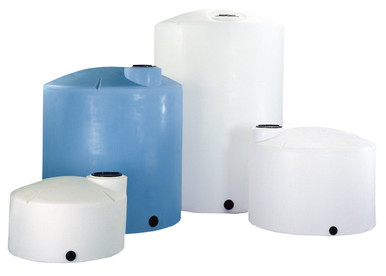
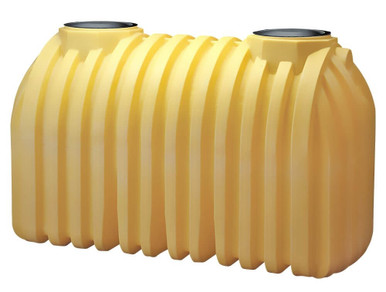
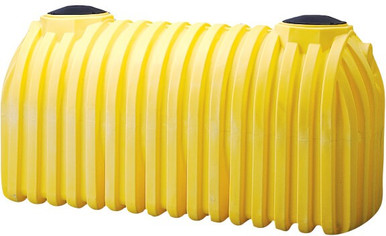
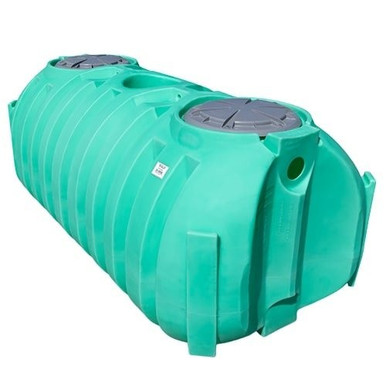
Minnesota (Minn. R. 7080) sizes septic tanks by bedroom count or design flow, with residential systems typically starting at 1,000 gallons. These IAPMO PS 1–listed polyethylene tanks meet that capacity standard; your county or state permitting office confirms the final size.
Shop all IAPMO PS 1–listed septic tanks →
Meeting the construction standard is not the same as a permit — your county environmental health office issues the permit and makes the final determination. Call us with your permit number and we will confirm the exact tank spec before shipment, with freight quoted to your ZIP.
Chemical Storage & Secondary Containment in Minnesota
Storing fuel, fertilizer, or process chemicals alongside your tank changes the rules. The federal Spill Prevention, Control, and Countermeasure rule (40 CFR Part 112) applies at 1,320 gallons of aggregate aboveground oil storage and requires secondary containment sized to at least 110% of your largest tank. Releases of hazardous substances above their federal reportable quantity (40 CFR 302.4) must be reported to the National Response Center at 1-800-424-8802.
Minnesota layers its own spill reportable quantities and restricted-substance rules on top of that federal floor — confirm the current thresholds with your state environmental agency before specifying a chemical tank. Just as important, the polyethylene resin must be matched to the exact chemical, concentration, and specific gravity you intend to store; a tank rated for water is not automatically rated for acid, bleach, or fertilizer.
Last reviewed: May 2026 · sourced from Minnesota administrative code
Regulations change on a rolling basis — confirm the current rule with your county or state agency before purchasing. Spot something out of date? Email us and we'll fix it.
Nearby states (West North Central) & full index: