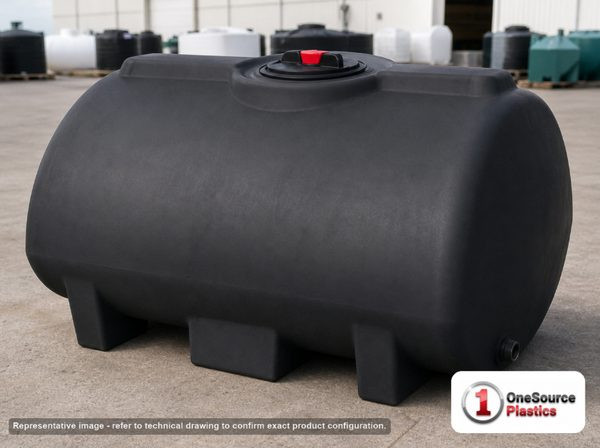
Snyder Captor Double-Wall Tanks for SPCC 40 CFR 112 Compliance: Walkthrough
The Spill Prevention, Control, and Countermeasure (SPCC) rule at 40 CFR Part 112 is the federal regulation that catches more facilities by surprise than any other oil-storage requirement. The rule applies to any non-transportation-related facility that stores more than 1,320 gallons of aggregate aboveground oil capacity (or 42,000 gallons buried) and could reasonably discharge oil into navigable waters of the United States or adjoining shorelines. The list of fluids that count as "oil" under this rule is broader than most operators realize — it includes vegetable oils, animal fats, fuel oils, lubricants, hydraulic fluids, and waste oils, not just petroleum.
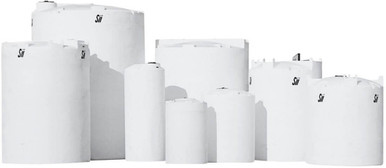
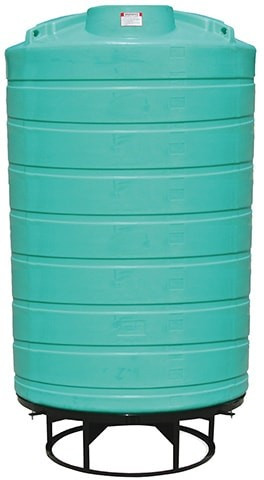
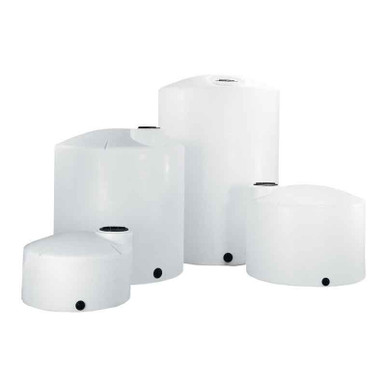
The hardest single requirement to engineer around is 40 CFR 112.7(c): secondary containment for the entire capacity of the largest single container, plus sufficient freeboard for precipitation. Traditional compliance is a concrete or earthen berm around the tank. The alternative — and often the cleaner installation — is a double-wall tank with integral secondary containment. The Snyder Captor product line is the rotomolded HDPE / XLPE answer to this requirement, and this post walks through how it works, what sizes are available, what the fittings have to be, and how monthly inspection is documented.
What 40 CFR 112 actually requires
The relevant subsections for a double-wall tank installation are:
- 40 CFR 112.7(c) — General secondary containment, sized for the entire capacity of the largest single container plus sufficient freeboard for precipitation, sufficiently impervious to contain spilled oil.
- 40 CFR 112.8(c)(2) — For onshore facilities (excluding production), construct all bulk storage container installations so that a secondary means of containment is provided for the entire capacity of the largest single container.
- 40 CFR 112.8(c)(6) — Test or inspect each aboveground container for integrity on a regular schedule, document inspection, retain records.
- 40 CFR 112.8(d)(4) — Provide loading/unloading area containment.
- 40 CFR 112.7(a)(3) — Written SPCC Plan, certified by a Professional Engineer for facilities > 10,000 gal aggregate (Tier I and Tier II self-certification thresholds apply for smaller facilities).
The double-wall tank approach satisfies 112.7(c) and 112.8(c)(2) by integrating the secondary containment into the tank itself: the outer shell IS the containment. EPA explicitly allows this in the SPCC Guidance for Regional Inspectors (Chapter 4), provided the outer shell is constructed of compatible material, has the capacity to hold the entire primary tank contents, and is monitored for breach.
Snyder Captor product line in the OneSource catalog
The Captor line covers 550 gallons through 10,000 gallons in HDLPE (high-density linear polyethylene), HDPE (high-density polyethylene), and XLPE (cross-linked polyethylene) variants. The XLPE variants carry an ASTM D1998-19 1.9 SG rating and the HDPE variants typically a 1.5 SG rating. Real SKUs in the OneSource catalog:
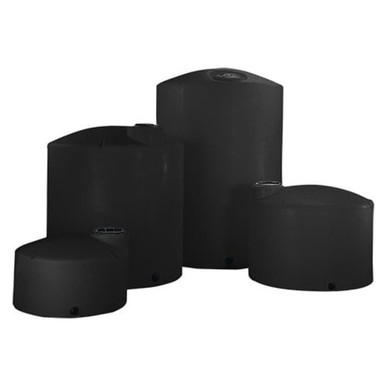
- SII-5040000N51 — Snyder 550 Gallon ASTM HDPE Black Captor Double Wall Tank, Listed at $6,599.00.
- 5580000N52 — Snyder 2500 Gallon Sodium Hypochlorite (UV) Captor Double Wall Tank, Listed at $18,701.29. UV-stabilized for outdoor exposure.
- SII-5590000N52 — Snyder 3000 Gallon HDLPE Captor Double Wall Liquid Storage Tank, Listed at $24,698.99.
- 5600000N42 — Snyder 3500 Gallon ASTM XLPE Captor Double Wall Tank, Listed at $25,399.00. XLPE 1.9 SG rated.
- 5600000N51 — Snyder 3500 Gallon ASTM Black Captor Double Wall Tank, Listed at $24,699.00.
- 5600000N52 — Snyder 3500 Gallon Sodium Hypochlorite (UV) Captor Double Wall Tank, Listed at $29,599.00.
- SII-1006600N42 — Snyder 10,000 Gallon XLPE Captor Double Wall Liquid Storage Tank 1.9 SG, Listed at $91,468.99.
- SII-1006600N43 — Snyder 10,000 Gallon HDLPE Captor Double Wall Liquid Storage Tank, Listed at $70,408.99.
- SII-1006600N45 — Snyder 10,000 Gallon HDLPE Captor Double Wall (alt color), Listed at $71,533.31.
- SII-1006600N49 — Snyder 10,000 Gallon HDLPE Captor Double Wall, Listed at $70,398.99.
How the secondary-containment math works
40 CFR 112.7(c) requires the secondary containment to be sized for the entire capacity of the primary container, plus enough freeboard to handle precipitation. EPA does not specify a fixed freeboard percentage in the rule itself, but Chapter 4 of the SPCC Guidance recommends the equivalent of a 25-year, 24-hour rainfall event for outdoor uncovered containment. Indoor or covered containment effectively eliminates the precipitation freeboard requirement.
The Captor double-wall design provides outer-shell volume sufficient to hold 100-110% of primary capacity. For an outdoor installation, the operator typically adds a covered roof or rain shield to eliminate the precipitation calculation entirely; for an indoor or covered installation, the integral 100-110% volume satisfies 40 CFR 112.7(c) without further engineering. This is the operationally cleanest SPCC compliance posture available short of an enclosed building with a poured-floor sump.
Compatible fluids — what the Captor can and cannot hold
The Captor line is rotomolded polyethylene. Compatibility is governed by chemical resistance of the resin against the stored fluid. The line covers a broad range of "oils" under 40 CFR 112 definition:
- Petroleum diesel and fuel oils — compatible, standard configuration.
- Used oil / waste oil — compatible, but verify additive package; some halogenated additives can attack HDPE over years.
- Vegetable oils, animal fats — compatible.
- Biodiesel (B100) — compatible at ambient temperature; verify temperature rating.
- Hydraulic fluids (mineral-oil-based) — compatible.
- Solvents that fall under "oil" definition — verify per fluid; aromatic solvents can degrade HDPE.
The Captor is not the right answer for gasoline or other Class I flammable liquids under NFPA 30 — those require steel UL-142 or UL-2085 construction, not polyethylene. Confirm the specific fluid and its NFPA classification before specifying. For chemical compatibility on aggressive fluids, see the /chemical-compatibility/ database.
Required fittings and accessories for SPCC compliance
A bare double-wall tank does not satisfy SPCC. The installation needs:
1. Vent — primary tank atmospheric vent
40 CFR 112.7(c) and tank manufacturer instructions require a properly sized atmospheric vent to prevent overpressure during fill and vacuum during draw. The Captor ships with a vent fitting; size it to match the maximum fill rate (typically 4″ for tanker-truck unloading at ~250 gpm, 2″ for smaller fill rates).
2. Overfill prevention — high-level alarm or auto-shutoff
40 CFR 112.8(c)(8) requires overfill protection. Three accepted approaches: (a) high-level alarm with audible/visual annunciation at the fill point, (b) automatic flow shutoff valve, (c) tank gauge with audible signal at 90%. Field practice on Captor installations is typically a high-level float switch set to 90% trigger, wired to a horn and beacon at the fill point.
3. Interstitial monitoring — leak detection between walls
This is the inspection-program piece. The space between primary and secondary shell must be monitored. Three methods, in order of common practice:
- Visual inspection of the interstitial sight tube — manual monthly check that the annular space is dry. Cheapest, requires monthly walk and log entry.
- Float switch in the interstitial space — wired to a panel alarm; if liquid accumulates between walls, the alarm trips. Eliminates the manual monthly check but adds a wiring/maintenance burden.
- Hydrostatic interstitial monitoring — pressurize the annular space; pressure decay indicates breach. Most expensive, used on regulated UST/AST installations or where hazardous fluid risk justifies it.
4. Loading/unloading area containment
40 CFR 112.8(d)(4) requires loading/unloading-area containment for tank truck operations. A drip pan, paved curb, or portable containment under the fill connection during transfer is the standard solution. The double-wall tank itself does not satisfy this requirement — it is a separate engineering item.
Monthly inspection per 40 CFR 112.8(c)(6)
The rule requires inspection on a regular schedule and documentation. Standard practice on a Captor installation is monthly, with the inspector checking:
- Primary tank shell — visible cracks, deformation, discoloration, weeping at fittings.
- Secondary containment annular space — dry per sight tube or no alarm trip.
- Vent — unobstructed, screen intact (if equipped).
- Fittings — all pipe connections leak-free, gaskets intact.
- Foundation — no settling or cracking under the tank stand.
- Overfill alarm — function-test by simulating high level (annual at minimum, monthly preferred).
- Loading/unloading area containment — in place, drains closed.
The inspection log must be retained for at least 3 years per 40 CFR 112.7(e). Most facilities retain longer (5-10 years) for liability protection. A simple monthly checklist with operator initials and date is sufficient for compliance.
SPCC Plan PE certification thresholds
40 CFR 112.3(g) and 112.6 set tiered certification thresholds:
- Tier I qualified facility — ≤ 10,000 gal aggregate aboveground, no single container > 5,000 gal, no oil discharges in 3 prior years. Self-certification by facility owner using EPA Tier I template.
- Tier II qualified facility — ≤ 10,000 gal aggregate, no oil discharges in 3 prior years, but with at least one container > 5,000 gal. Self-certification but using full SPCC Plan format.
- Non-qualified facility — > 10,000 gal aggregate, or facilities with prior discharge history. Plan must be reviewed and certified by a licensed Professional Engineer.
For most operations buying a single 3,000-3,500 gal Captor as primary oil storage, Tier I or Tier II self-certification applies and PE certification is not required.
Cost comparison vs concrete berm + single-wall tank
| Cost line item | Single-wall + concrete berm | Captor double-wall |
|---|---|---|
| 3,500-gal tank | $3,500-5,500 | $21,700 (Captor XLPE) |
| Concrete berm + sealant | $8,000-15,000 | Included |
| Footprint impact | 2x tank footprint | 1x tank footprint |
| Rainwater management | Drain valve + monthly pump-out | Optional roof / not required if covered |
| 5-year total cost of ownership | $15,000-22,000 | $22,000-25,000 |
The double-wall premium versus single-wall + berm is real but smaller than it looks at the headline price. When you account for berm construction, footprint cost, and ongoing rainwater management, the Captor approach is comparable in 5-year TCO and considerably simpler operationally. For sites where footprint is constrained or aesthetics matter, the Captor is the obvious choice.
Bottom line
The Snyder Captor double-wall product line is the cleanest path to 40 CFR 112 SPCC compliance for a single-tank installation up to 10,000 gallons. It satisfies 40 CFR 112.7(c) and 112.8(c)(2) integrally, supports the 112.8(c)(6) monthly inspection program with simple sight-tube monitoring, and avoids the footprint and rainwater-management overhead of a concrete berm. Pair it with a high-level alarm, properly sized vent, and loading/unloading area containment, and the SPCC Plan writes itself.
For sizing recommendations on a specific Captor SKU + freight quote to your destination ZIP, use /freight-cost-estimator/ or call 866-418-1777 with your fluid type, total capacity needed, and indoor/outdoor installation environment.
Field Operations Addendum
A double-wall tank does not produce SPCC compliance on its own — it is one element of an SPCC plan that the facility owner has to write, certify, and maintain. The post above covers the tank specification; the addendum here covers the recurring obligations the owner inherits the day the tank is commissioned.
Annual plan review under 40 CFR 112.5. The federal rule requires the SPCC plan to be reviewed and evaluated at least once every five years, and amended within six months of any change in facility design, construction, operation, or maintenance that materially affects the potential for a discharge. Most operators run a lighter review every year as a matter of practice — walk the secondary containment, confirm the inventory list still matches the plan, verify the discharge prevention briefings have been completed for operating personnel, and document the walk-through in the plan file. The five-year clock is the regulatory minimum; the annual cadence is what keeps you ready for an unannounced inspection.
Owner inspection cadence. The plan has to specify the inspection frequency for each container, and at minimum this should include a monthly visual of the outer wall, the interstitial leak detector, and the tank pad for staining. Quarterly, pull the leak-detector reading and log it. Annually, check the vent screens, confirm the level gauge tracks the inventory record, and inspect any concrete pad or earthen berm that surrounds the tank for cracks or erosion. Keep the inspection log on-site for at least three years.
Professional Engineer recertification triggers. A facility above the 10,000-gallon aggregate threshold needs a PE-certified plan. The PE has to recertify the plan after any "technical amendment" — a changed tank size, a relocated tank, a new chemical service, a redesigned containment, or a change in piping that alters the discharge pathway. Cosmetic amendments (updated phone numbers, revised personnel rosters, new emergency contacts) do not require recertification but do require dated revisions in the plan log. When in doubt about whether a change is technical, ask the PE before the work happens — a retroactive recertification is more expensive than a pre-construction review.
Recommended Tanks for This Guide
Live pricing, updated automatically · estimate freight to your ZIP.